
Heavy Events
Heavy events including tossing the caber, shott putt and tug-o-war here at the ‘friendly games’
Heavy Events
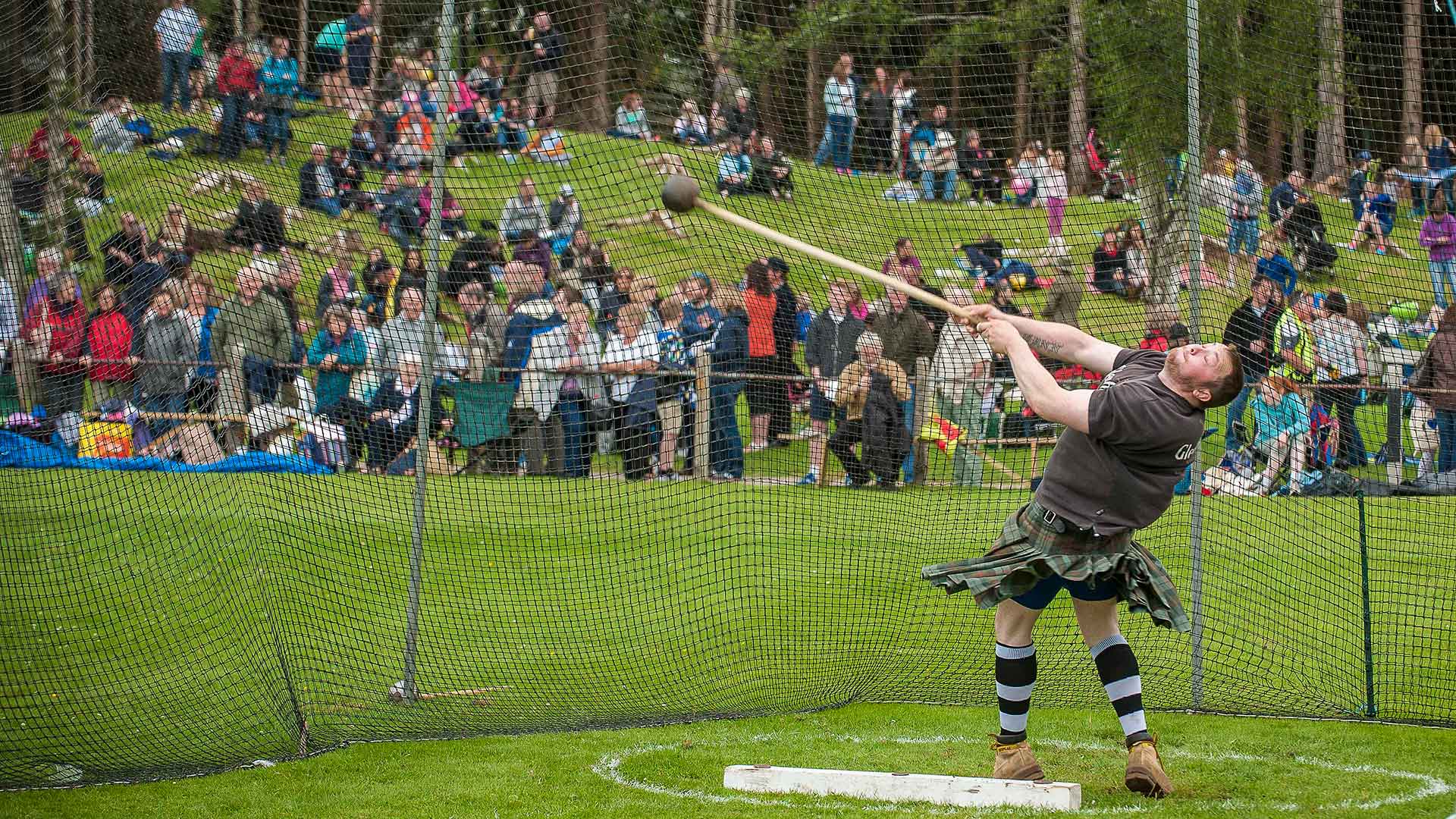
Heavy Events are traditional strength events which are associated with the Scottish Highlands. The origins of many of the Heavy Events are often in dispute. However, our history is saturated with warlike activities and it would be surprising if the Games didn’t represent some vestige of our gory past – but not all of the heavy events originated from this warring background. In times gone by, the monotony of hard physical work was often lessened by sporting challenges of strength and skill, accompanied by a flying exchange of humorous banter.
Whatever materials were to hand would be used and these naturally included the stones which were removed from the fields, to improve tillage. In the Weight for Distance Events, we can imagine a group of workers taking turns to show their strength against each other and against the weight itself. The rounded shape of the Scots Hammer reveals that, although it no doubt had many peaceful applications, it was once wielded as a devastatingly effective weapon.

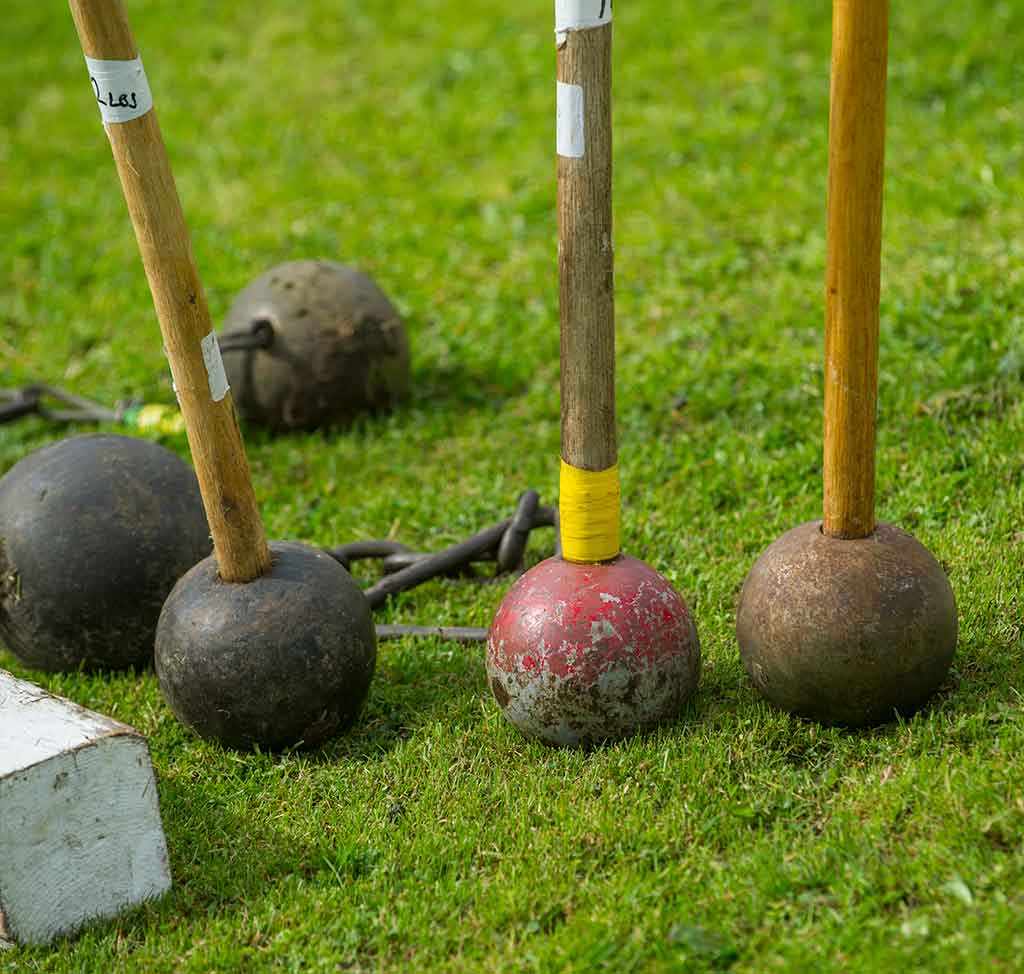


All competitors in Heavy Events are required to maintain tradition in their dress as well as in their sport, by wearing the kilt when they compete. It is a cast-iron rule of the Games that this should be so, in order to encourage the wearing of the kilt.The Weight over the Bar competition involves throwing a weight single-handed. The technique used is to swing the weight between the legs before pulling it up and over the bar. The competition is determined by the highest successful throw, with the fewest misses being used to break tie scores. The size of weight varies with age class. The open competition competitors throw a 56lb weight, the juniors aged 17-19 yrs throw a 44lb weight and those aged 15-16 throw a 32lb weight.
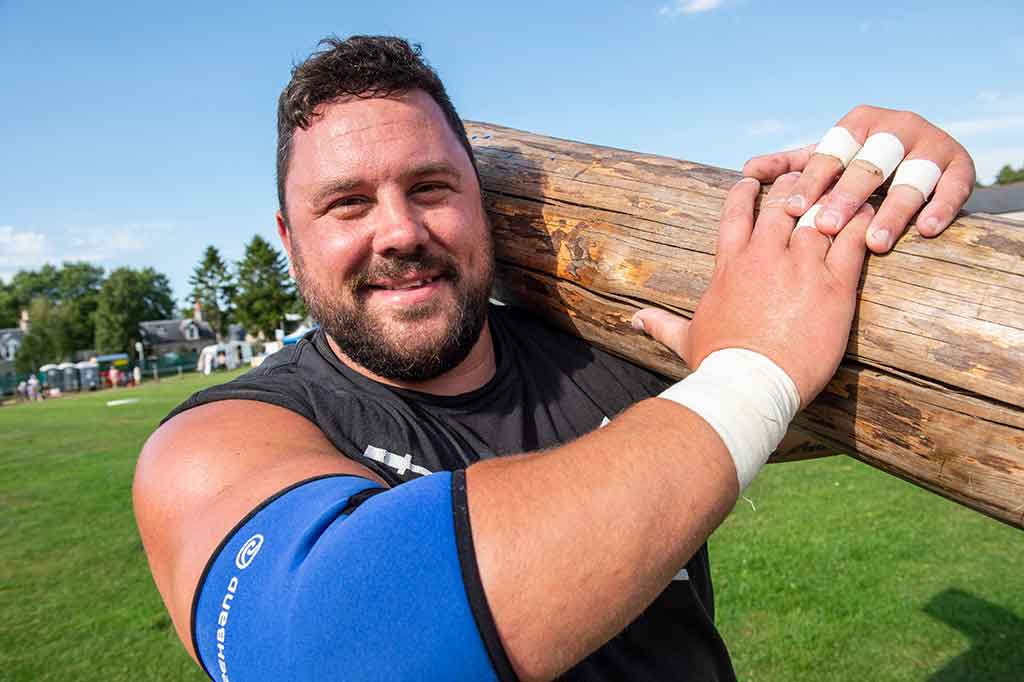
Tossing the Caber is perhaps the most distinctively spectacular Scottish Heavy Field Event, said to have its humble origins in the sport between neighbours helping a young couple build their first home. The caber, or roof-beam, was a vital structural element in the old thatched Highland dwelling and while the right to cut timber in the forests was controlled by the Lairds, there was a traditional expectation that at certain times cabercould be taken. Such work might be accompanied by an element of merriment and the Fear Òg, the young man, might be left balancing a caber all by himself at a critical moment.
In this competition it is the manner in which the caber is tossed which counts, rather than the distance it is thrown; when the heavy end hits the ground, the lighter end must be made to arc over and fall in a straight line away from the competitor. Such a feat needs great skill, judgement and strength.
To encourage interest in traditional heavy events among the next generation, we split the junior heavy age category in two and there is now a trophy for the younger (15-16 years) age group – the Stuart Pountney Memorial Trophy – which is on display in the Secretary’s tent.
In 2016 we introduced new junior events for girls.
A Tug o’ War between some of the visiting pipe bands will be run in the course of the afternoon and this will be announced on the field on the day.